
The SAVE plan is ending. Borrowers enrolled in the SAVE plan for their federal student loans are starting to get notices that they have 90 days to switch into a new repayment plan. Watch this short webinar below on what you need to know about SAVE ending (run time: 12 minutes).
- SAVE is Ending
- When will I get my notice to switch?
- What should I do if I can’t afford payments in a new plan?
This webinar is brought to you by NCLC and the International Rescue Committee in Sacramento, with support from the California Department of Financial Protection and Innovation.
SAVE is Ending
Again, the SAVE plan is ending. Notices are being sent out now letting people know they have 90 days to switch to a new plan. Borrowers may be sent notices on different dates, and the 90-day period will start on the date of the notice, so borrowers will have different deadlines to change plans.
If you get one of these notices, you need to act quickly. If you don’t enroll in a different repayment plan by the end of your 90-day period, you will likely be placed in the Standard plan (or Tiered Standard plan if you took out any new loans or consolidated loans after July 1, 2026). Standard and Tiered Standard plan payments are based on your loan balance, not your income, and are often much higher than payments in SAVE or other income-driven repayment (IDR) plans.
For help choosing a new plan, use the Department of Education’s Repayment Calculator tool and see here for more information about choosing a repayment plan. You can apply for a new IDR plan online at studentaid.gov/idr.
When will I get my notice to switch?
These notices are being sent in waves. Some borrowers have already received them, but others have not yet. If you’re still on the SAVE plan, you need to pay close attention to any notices you get from your servicer. Check your email, your mail, and your inbox on your online account with your servicer.
From what we have heard, the notice you get won’t tell you an actual date to switch plans. Instead, it will just say you have 90 days from the date of the notice to switch, so you may have to do some math to figure out your deadline. If you get multiple notices with different dates, you should go by the earliest date to be on the safe side. Even if you miss the deadline and are switched to a standard plan, you can still apply for an IDR plan later.
You do not have to wait until you receive your notice to switch plans. You can switch plans now if you are ready. Switching soon might be a good choice if you want to make progress on paying down your loan or earning credit toward loan forgiveness in Public Service Loan Forgiveness (PSLF) or Income-Driven Repayment (IDR).
What should I do if I can’t afford payments in a new plan?
If you realize you cannot afford a new plan, you have options.
First, you can request to switch plans again. Use the Repayment Calculator or call your servicer to see whether there is another plan you can afford or that makes more sense for your financial situation.
Second, if you cannot afford your payment in any plan, you can request a temporary forbearance. A forbearance will temporarily stop your payments and keep your loan from becoming delinquent or defaulting. But forbearances have downsides. There are limits on how long you can be in forbearance, and interest will continue to be charged to your loan while in forbearance — so how much you owe will increase. Forbearances are a temporary fix, not a long-term solution, but they can buy time to figure out how you’ll manage your loans while preventing your loan from going into default.
On July 1, 2026, a number of changes to student loan borrowers’ options will go into effect. How you are impacted by these changes depends on your situation —whether you’re currently in school, in repayment, or planning to borrow for school in the future. Parents who take out student loans for their children’s education will also be impacted.
This article discusses what you need to know and what options you’ll have after July 1, 2026, including:
- What is changing on July 1?
- How is the new income-driven repayment plan, RAP, different from other repayment plans?
- How is the new Tiered Standard Plan different from other plans?
- I am currently repaying federal student loans. What do these changes mean for me?
- I borrowed Parent PLUS loans for my child’s education — will I be impacted?
- I want to borrow federal student loans to go to school in the future.
- I am currently in school. What do these changes mean for me?
It is more important than ever to have a plan for student loan repayment so that your loans do not go into default. Navigating all of the changes can be challenging, but the Student Loan Borrower Assistance Project is here to help, with guidance on understanding your loan situation, repaying your loans, loan forgiveness and cancellation programs, and postponing payments when you need time to figure out a plan.
What is changing on July 1?
On July 1, 2026, new rules on student loan repayment options and borrowing limits will go into effect. That will:
- Add a new income-driven repayment plan option, called the Repayment Assistance Plan (RAP), which will be available for most borrowers.
- Create two separate repayment tracks for Direct Loan borrowers, with different repayment options depending on whether the borrower took out any new loans (or consolidated existing loans) on or after July 1, 2026:
- Existing borrowers who took out all of their loans before July 1 will keep most of their existing repayment options – for now – and will add the new RAP option. Many existing borrowers can continue with their current repayment plans. But the SAVE plan is being eliminated, and the new rules will eliminate the PAYE and ICR plans in July 2028.
- Borrowers who take out any new loans on or after July 1, or who consolidate their existing loans after July 1, will only have two potential options: the new RAP plan or the new Tiered Standard Plan.
- End the Grad PLUS loan program (a type of loan for graduate and professional schools that previously allowed students to borrow up to the full cost of attendance) for any borrowers starting a program on or after July 1.
- Place new limits on how much students and parents can borrow in federal student loans, with limited exceptions for students who are currently enrolled and took out loans before July 1. These changes will primarily impact graduate and professional students and parents who take out loans for their children’s education.
In addition, borrowers enrolled in the SAVE plan will start receiving notices that they must switch to a different repayment plan because the SAVE plan is ending. For more on the end of SAVE, read our article on what borrowers in SAVE need to know.
How is the new income-driven repayment plan, RAP, different from other repayment plans?
On July 1, the Department of Education will begin allowing Direct Loan borrowers to enroll in RAP, a new income-driven repayment (IDR) plan that calculates borrowers’ monthly payments off of a percentage of their income and cancels any remaining balance after 30 years of repayment. As in other IDR plans, payments in RAP will count towards Public Service Loan Forgiveness (PSLF).
Who is eligible?
All Direct Loans taken out for your own education are eligible for RAP. (Parent PLUS loans and consolidation loans containing Parent PLUS loans are not eligible.)
How are payments calculated?
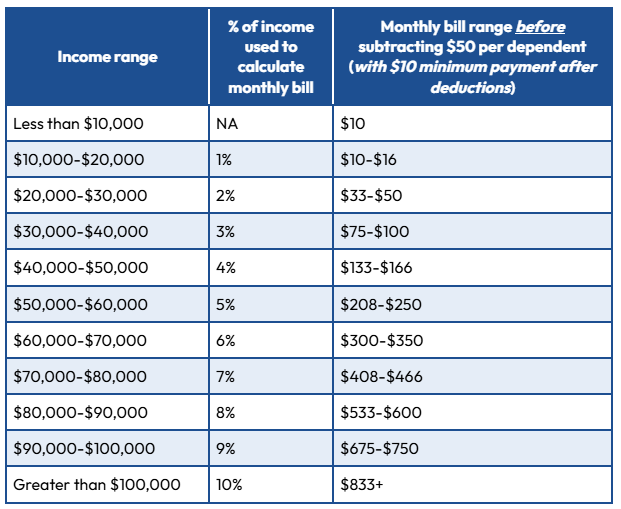
Monthly payments will be calculated as a percentage of the borrower’s total income (using adjusted gross income, or AGI) minus $50 per month per dependent, with a minimum $10 payment:
What makes RAP different?
RAP has some important pros and cons that are different from the existing income-driven repayment plans.
Pros:
- Your loan balance will always decrease while you’re in the RAP plan and making on-time payments because any interest that accrues during a month that is not paid off via your monthly payment will be waived (canceled). In addition, if your monthly payment does not reduce your principal by at least $50 on its own, the government will reduce your principal by up to $50.
- Many borrowers will be able to pay off their loans sooner in RAP than in other IDR plans and will pay less in total over time.
Cons:
- Your monthly bill may be more expensive than it would be in the other IDR plans, particularly if you took out your loans after 2014, are low income, high income, or have a spouse or children. The RAP plan uses a very different repayment formula than the other IDR plans, and all borrowers must pay a minimum of $10 a month, no matter how little they make.
- Your maximum repayment period until you qualify for forgiveness of any remaining loan amount will be longer. In the RAP plan, you will not qualify to have your loans forgiven until you have made 30 years of payments, unlike 20-25 years in the other IDR plans. (However, most borrowers will repay in full before reaching 30 years, and will stop making payments then.)
- Time in RAP will not count towards forgiveness in the IBR plan. This means that if you eventually want to switch to IBR, you may have more years until you reach forgiveness.
For some borrowers, the benefits of a steadily decreasing loan balance and a potentially faster payoff may outweigh the risk of higher payments and a longer wait for loan forgiveness. To compare your potential IDR options, visit our page on all of the IDR plans and check out Federal Student Aid’s Repayment Calculator.
How is the new Tiered Standard Plan different from other plans?
A new fixed repayment plan, the Tiered Standard Plan, will also become available on July 1, 2026, but it will only be available to borrowers who take on at least one new loan after that date. This is the plan borrowers’ Direct Loans will automatically be placed in if they take out loans after July 1, 2026 and do not request the RAP plan.
Who is Eligible?
You must borrow a new loan after July 1, 2026, or consolidate your existing loans, to be eligible for the Tiered Standard Plan. Only Direct loans are eligible.
How is the Tiered Standard Plan different?
Like the old Standard plan, this plan generally requires the same payment every month and is designed to pay off a borrower’s loan in full by the end of their repayment period. But under the new Tiered Standard Plan, borrowers’ repayment periods will be based on their total outstanding Direct loan amount and will vary from 10 to 25 years.
That means many borrowers will have a longer repayment period in the Tiered Standard Plan than in the Standard plan for pre-July 2026 borrowers. Borrowers can always make extra payments to pay off their loans faster.
Other things I should be aware of?
Time spent in the Tiered Standard Plan will not count towards Public Service Loan Forgiveness.
To compare all of your repayment plan options, visit our page on repayment plans. To see what your monthly bill would be on the other plans, visit the Federal Student Aid’s Repayment Calculator.
I am currently repaying federal student loans. What do these changes mean for me?
If you are currently repaying federal student loans, the changes that take effect on July 1, 2026 might not impact you.
The changes on July 1, 2026 will only impact you if:
- You are enrolled in the SAVE plan and need to enroll in a new repayment plan. Starting on or after July 1, 2026, borrowers enrolled in the SAVE plan will be forced to pick a new repayment plan. If you are enrolled in SAVE and do not take out a new loan or consolidate any loans after July 1, 2026, you will be eligible for IBR and the new RAP plan, among other options for existing borrowers. You can learn more about the end of the SAVE plan in The SAVE Plan is Ending: What Borrowers in SAVE Need to Know.
- You take out a new loan or consolidate after July 1, 2026. If you take out even one new loan, or consolidate any of your existing loans, you will lose access to your current repayment options. Instead, you have to repay all of your Direct Loans in either the Tiered Standard plan or the RAP plan. You should consider whether you can afford payments in these plans before consolidating or taking on any new federal student loans.
- You want to access the benefits of the new RAP plan. All Direct loans for your own education are eligible for the RAP plan starting July 1, 2026.
- You owe Parent PLUS loans borrowed for your child’s education. More information on Parent PLUS loans is in the next section.
If you only have loans from before July 1, 2026, you will continue to have the same access to the existing IDR plans, IBR, ICR, and PAYE, as well as the Standard, Graduated and Extended plans. But, the ICR and PAYE plans will end on July 1, 2028, and if you are in ICR or PAYE, you will have to switch plans when they end.
I took out Parent PLUS loans for my child’s education — will I be impacted?
The July 1 changes will have a dramatic impact on many parents who took out Parent PLUS loans to pay for their child’s education. The impact will depend on whether you have already consolidated your Parent PLUS loans and whether you take out any new loans.
- If you consolidated your Parent PLUS loans before July 1, 2026, and you do not take on any new loans after July 1, 2026, then you can pay your Consolidation loan in an income-driven repayment plan if you enroll in IDR before July 1, 2028. Generally, you will have to enroll first in the ICR plan, and then after one payment you can switch to the IBR plan. If you do not switch out of ICR before the plan ends on July 1, 2028, you will be automatically switched to IBR then.
- If you did not consolidate your Parent PLUS loans before July 1, 2026, then you will not be able to repay them in an income-driven repayment plan. Your options will be limited to fixed repayment plans like the Standard or Extended plan, or, if you consolidate or take out a new loan after July 1, to the new Tiered Standard plan.
- If you consolidated your Parent PLUS loans before July 1, 2026, but you take out any new loans (or consolidate loans) after July 1, 2026, then you will not be eligible to repay any of your Parent PLUS loans (or Consolidation loans that repaid Parent PLUS loans) in an income-driven repayment plan. Instead, you will have to pay them in the new Tiered Standard plan.
- If you are planning on borrowing at least one Parent PLUS loan after July 1, 2026, then your options to repay it will be limited. Any Parent PLUS loans borrowed after July 1, 2026 will only be eligible for the Tiered Standard Plan. Additionally, after July 1, the amount that you will be able to borrow in Parent PLUS loans will be more limited.
Some people have loans for their own education, as well as Parent PLUS loans for their children’s education. If you have both types of loans, you can still repay loans for your own education in an income-driven repayment plan even if your Parent PLUS loans are not eligible. You will just have to repay your Parent PLUS loans in a separate plan, and you should not consolidate them with loans for your own education. If you consolidate your own loans with any Parent PLUS loans, the entire consolidation loan will need to be repaid in the Tiered Standard plan.
I want to borrow federal student loans to go to school in the future.
If you aren’t already enrolled in school, but want to go to school and take out loans in the future, your options will be more limited. Many students who go to school after July 1, 2026, will not be able to borrow as much in federal student loans as students who attended school before that date. This applies to students who go to school for the first time, return to school after stopping a prior program, or return to school for a new program. This change will primarily impact people who go to graduate or professional school and families that rely on Parent PLUS loans (loans taken out by parents for their children’s education).
Generally, if you enroll in a program after July 1, 2026:
- There are new limits on how much students can borrow for graduate and professional education. If the Department of Education considers a program to be a “graduate” program, you can borrow up to $20,500 per year and a total limit of $100,000. If you’re in a “professional” program, you can borrow up to $50,000 per year and a total limit of $200,000.
- There are no more Grad PLUS loans — a loan type for graduate and professional programs that previously could cover up to the full cost of attendance.
- There are new limits on Parent PLUS loans. Parents can only borrow up to $20,000 per child per year, and a total of $65,000 in Parent PLUS loans per child.
- Borrowers will be subject to a lifetime loan limit of $257,500 for any federal student loans ever borrowed, excluding Parent PLUS loans. This limit will apply regardless of whether any of those loans were paid off or canceled.
In addition, when it comes time to repay your new student loans, you will be limited to only two options: the Tiered Standard Plan and the RAP plan. (Parent PLUS borrowers will be limited to only the Tiered Standard Plan.) If you already have Direct Loans, then taking out new loans will change your repayment options on all of your Direct Loans. You will lose access to the existing repayment plans and will only be able to repay your Direct Loans in the Tiered Standard Plan or the RAP plan.
I am currently enrolled in school. What do these changes mean for me?
If you are currently enrolled, both the new loan limits on how much you can borrow and the changes to repayment options could impact you.
Loan Limits
If you are currently enrolled in school and took on at least one federal student loan for the program you are enrolled in before July 1, 2026, then the graduate and professional loan limits discussed above will not apply to you while you are completing your program. But, if you switch programs or switch schools, you will be subject to the new loan limits.
The new limits on Parent PLUS loans will not apply to you if you are currently enrolled in school and either took out a Direct loan before July 1, 2026 or your parent took out a Parent PLUS loan for you before that date for the program you are currently enrolled in. But the limits will apply if you switch schools, withdraw, or complete your program. The limit will not apply to you if you switch majors within the same degree.
Repayment Options
If you are enrolled in school and take on a new loan after July 1, 2026, all of your Direct Loans will only be eligible for the RAP plan or the Tiered Standard plan, discussed above, even if you took out some loans for your program before July 2026. Current students are not exempt from the repayment changes.
The Department of Education recently announced that it would provide a temporary, additional interest rate reduction to people with federal student loans who sign up for auto pay.
Starting July 1, 2026, people who are enrolled in auto pay or who sign up for auto pay by September 30, 2026, will get a 1% reduction in their student loan interest rate. Currently, borrowers on auto pay already get a .25% interest rate reduction, so this new change will increase that benefit temporarily to 1%. The additional interest rate reduction lasts through June 30, 2028. This benefit will apply to all Direct Loans that were issued after July 1, 2012, including Parent PLUS Loans.
A lower interest rate means you could pay less on your student loan debt over time. While this temporary benefit won’t solve the student loan crisis, it’s still a good way to save some money.
How do I get the lowered interest rate?
You need to sign up for auto pay with your loan servicer by September 30, 2026. To do this, log in to your account on your loan servicer’s website and select auto pay under the repayment options menu. If you have more than one loan servicer, you’ll need to do this for each of those accounts.
If you’re already signed up for auto pay, you don’t need to do anything else, and the interest rate reduction will be applied automatically.
Does it matter what type of payment plan I’m enrolled in?
No. It generally doesn’t matter what type of payment plan you’re enrolled in, as long as you are signed up for auto pay, you should automatically receive the interest rate reduction beginning July 1, 2026. But if you’re on the SAVE plan you first need to switch plans and sign up for auto pay again in order to get this benefit.
What if I’m in default on my loans?
Unfortunately, you can’t just start making payments on your federal loans once they’re in default to get this benefit. You first have to take steps to get your loans out of default in order to then sign up for auto pay and get the interest rate reduction.
Right now, the two common ways most borrowers get their loans out of default are consolidation or loan rehabilitation.
A loan rehabilitation is less risky right now for most borrowers in default, but it takes nine months to complete. In a loan rehabilitation, you enter an agreement to make nine full, on-time, reasonable and affordable payments over nine months to remove your loans from default. If you haven’t already started this process, you won’t have time to do this before September 30, 2026–the deadline to sign up for the temporary increased interest rate reduction on auto pay. See our page on the ins and outs of loan rehabilitation.
You may be able to consolidate your loans to get them out of default in time to sign up for auto pay by the September 30th deadline; however, there are major downsides to consolidating loans right now. If you consolidate your loans to get out of default right now, you will lose access to many repayment plans on all your loans going forward. In addition, you will likely lose any time you’ve earned on the loans being consolidated that would count towards forgiveness in income-driven repayment plans. For more information on these risks, see our page on consolidation.
The SAVE plan was created in 2023 and was the most affordable student loan repayment option, but it was challenged in court and is now being eliminated by the Department of Education. This article covers what the 7 million people enrolled in the SAVE plan need to know now that the SAVE plan is ending.
- Why is the Department of Education eliminating the SAVE plan?
- What do I need to know if I’m already on the SAVE Plan?
- How do I pick a new plan?
- Do I have to wait until July 1 to change plans?
- What happens if I’m moved to a plan with payments I can’t afford?
Why is the Department of Education eliminating the SAVE plan?
The Department of Education agreed to eliminate the plan to settle a lawsuit brought by Missouri and several other states. The Department also requested that the court enter judgment for Missouri and vacate most of the 2023 rules that created the SAVE plan. On March 10, 2026, a federal court entered the judgment and order as the Department requested.
What do I need to know if I’m already on the SAVE Plan?
You will not be able to stay in the SAVE plan for long. You will need to enroll in a different repayment plan soon, likely within 90 days of July 1, 2026. The Department has announced that loan servicers will begin sending notices to borrowers enrolled in SAVE on or around July 1, 2026, telling them to enroll in a different repayment plan within 90 days. This means you will probably need to switch plans by the end of September 2026.
Note: You may also have received emails from the Department of Education in March or April 2026 warning you about these upcoming changes, but the 90-day deadline for switching plans should not start until servicer emails are sent sometime around July 1.
If you do not enroll in a different repayment plan by the end of your 90-day period, the Department has said you will be automatically reassigned to another plan, likely the Standard Repayment Plan. Payments in the Standard plan are based on the borrower’s loan balance, not their income, and are often much higher than payments in SAVE or other income-driven repayment plans.
After switching plans, you will start getting monthly bills. You will be required to make payments unless you qualify for a $0 payment in your new plan or you request a forbearance or deferment to postpone payments.
How do I pick a new plan?
If you are currently in SAVE and must switch plans, you can use our website to learn more about other repayment options and how to think about choosing a plan. Explore other income-driven repayment (IDR) options that base your monthly payments on your income and family size:
- Income-Based Repayment (IBR),
- Pay As You Earn (PAYE), and
- Income-Contingent Repayment (ICR)
Each of these IDR plans have different eligibility criteria, but they all base payments on income and family size and promise cancellation of any remaining debt after 20 to 25 years in repayment. Depending on your income and family size, your payments may be as low as $0 per month in these plans.
You may also be interested in the Repayment Assistance Plan (RAP), a new income-driven repayment plan that will be available on July 1. RAP is different from the other IDR plans:
- It uses a different formula to calculate payments, and does not offer $0 payments no matter how low your income is.
- It has the longest repayment period before any remaining debt is cancelled (30 years).
- It provides more help to make progress in paying down your loans: it cancels any interest not covered by your monthly payment (like SAVE did) and it provides a small principal reduction of up to $50 per month for some borrowers.
RAP may be a good fit for you if you want to fully pay off your loans and you want to get any interest not covered by your monthly payments cancelled. However, RAP may not be a good option for you if you are low-income, because you may face higher monthly bills and be in repayment for a longer period of time before your loans are cancelled.
Other options include the Standard and Extended plans, which set payments based on the amount of your loan balance and require you to fully repay your loans within a set number of years. Typically borrowers finish repayment sooner but have higher monthly payments in the Standard Plan than in IDR plans.
You can use the government’s Loan Simulator to estimate your monthly payments, the total amount you’ll pay, and the period you’ll pay in each of the repayment plans that you are eligible for. Right now, Loan Simulator does not provide payment estimates for the RAP plan, but you can use the nonprofit EDCAP’s calculator to estimate your payments in RAP.
You can apply for income-driven repayment plans online at studentaid.gov.
Do I have to wait until July 1 to change plans?
No, you do not have to wait to switch plans. You can apply for a new plan now, but you cannot yet request the Repayment Assistance Plan (RAP) because it is a new plan that will not be available until July 1.
It might make sense to switch plans now if:
- you are able to afford payments in another plan, and
- you want to begin making progress toward paying off your loan or toward loan forgiveness through Public Service Loan Forgiveness (PSLF) or Income-Driven Repayment.
On the other hand, it might make sense to wait until July 1 to switch plans if:
- you want to enroll in RAP, which won’t be available until July 1, or
- you do not qualify for a $0 payment in another plan and cannot afford the payments you would owe in other plans.
Waiting until July 1 will give you more time before you need to make payments, but be aware that interest will continue to be charged while you wait.
Once you have been accepted into a new repayment plan, you should expect to start receiving bills again unless you are eligible for a $0 payment in your new IDR plan.
Note: SAVE was the most affordable repayment plan, and your monthly bills in SAVE were probably based on your income from two or more years ago. Your new payments will most likely be higher in whatever plan you switch to, both because other plans are more expensive than SAVE and because your payments will likely be based on more recent income, which may have gone up.
What happens if I’m moved to a plan with payments I can’t afford?
If you realize you cannot afford your new plan – regardless of whether you chose your plan or were automatically switched by the Department – you have options.
First, you can request to switch plans again. Use the Loan Simulator or call your servicer to see whether there is another plan you can afford or that makes more sense for your financial situation.
Second, if you cannot afford your payment in any plan,you can request a temporary forbearance. A forbearance will temporarily stop your payments and keep your loan from becoming delinquent or defaulting. But, forbearances have downsides: there are limits on how long you can be in forbearance, and interest will continue to be charged to your loan while in forbearance — so how much you owe will increase. Forbearances are a temporary fix, not a long term solution, but they can buy time to figure out how you’ll manage your loans.
For official government information about the plan to eliminate SAVE, borrowers can visit the Department of Education’s website.
For more background about the history of the SAVE plan and the lawsuits surrounding it, see our previous blog posts on this issue.
This post provides more updates and information covered in our previous post on what Parent PLUS borrowers need to do to lower their payments due to changes under a new law, the Big Bill. Check out the previous post for more information on what happens if you borrow a new loan (or a new Parent PLUS loan) on or after July 1, 2026.
If you are currently repaying a Parent PLUS loan, you need to act fast if you want to have the option to repay it in an income-driven repayment (IDR) plan. If you do not apply to consolidate Parent PLUS loans quickly, so that the consolidation loan is issued before July 1, 2026, you will not be able to pay those loans in an IDR plan moving forward. If you haven’t yet applied to consolidate your Parent PLUS Loans, act now so you don’t miss the July 1, 2026 deadline.
Generally, it takes 4 to 6 weeks for a consolidation application to be processed. But, don’t wait to apply to consolidate! The longer you wait, the less likely the consolidation loan will be issued before the deadline.
Once your Parent PLUS loans have been consolidated, you must sign up for an IDR plan before July 1, 2028. If you do not, you will not be able to pay the consolidation loan containing a Parent PLUS loan in an IDR plan in the future.
If you are enrolled in an income-driven repayment plan, the Department of Education determines your monthly payment based on your income and your family size, not how much you owe. If your income decreases, so does your monthly payment. For many borrowers, income-driven repayment plans are much more affordable than other repayment plans. Some low-income borrowers can even have $0 monthly payments!
What if my consolidation loan is disbursed after the July 1, 2026 deadline?
If your loan is disbursed on or after the July 1, 2026 deadline, it will change the repayment options available on all of the Direct Loans you owe. You will NOT be able to sign up for any IDR plan for the consolidation loan containing the Parent PLUS loans. If you take on any loan after July 1, 2026 any consolidation loans that contain Parent PLUS loans will only be eligible for the new Tiered Standard Plan.
Is there anything I can do to stop the consolidation if I think I will miss the July 1, 2026 deadline?
Yes, before the consolidation is completed, the servicer will send you a letter listing which loans should be consolidated and telling you that it will finish processing the consolidation application if it does not hear from you within 10 days. If you get this letter and it looks like the consolidation loan will be issued after the July 1st deadline, you can call your servicer to cancel the consolidation.
How do I consolidate my Parent PLUS loans?
You can apply online by logging into your account on studentaid.gov and completing the online application. When you apply online, you can select which loans you want to consolidate. Make sure you select your Parent PLUS loans! If your loans are in default, you will need to manually enter them into the online form. You can also apply using a paper or PDF application, available here.
When you apply to consolidate your loans, you can also submit an application to repay your loans in an IDR plan. At first, the consolidation loan will likely only be eligible for the Income-Contingent Repayment (ICR) plan. But after you make one payment in ICR, you can then apply to switch into the Income-Based Repayment (IBR) plan, which offers lower payments than ICR for most borrowers.
More information on how to consolidate your loans is available here.
The CFPB announced last week that borrowers affected by Navient’s misconduct will soon begin receiving payments.
In September 2024, the Consumer Financial Protection Bureau (CFPB) announced that it was permanently banning Navient from servicing most federal student loans due to illegal practices that harmed borrowers. Navient was also ordered to pay $100 million in relief to affected borrowers and a $20 million civil penalty to the CFPB.
If Navient was the servicer of your federal student loans in the past, you may soon receive a payment. This news highlights the CFPB’s important role in delivering compensation and critical relief for people harmed by illegal business practices. For more information about the settlement, visit the CFPB’s page on the Navient lawsuit.
What do borrowers have to do to receive payment from the settlement?
The CFPB will mail checks to borrowers who are eligible for payment under the settlement, and borrowers do not need to do anything. The CFPB has provided information about these payments, including instructions for borrowers who believe they are entitled to a payment.
If you have questions about the Navient settlement, you can reach out to the administrator of the CFPB settlement, Rust Consulting, via the following methods:
- Call:1-800-711-8418 (toll-free)
- Email: navient_info@rustcfpbconsumerprotection.org
- Write: CFPB v Navient
P.O. Box 2561
Faribault, MN 55021-9561
What was the CFPB lawsuit against Navient about?
The CFPB’s lawsuit was filed in 2017 and accused Navient of engaging in harmful practices. Navient, formerly known as Sallie Mae, was once the nation’s largest student loan servicer, servicing over 12 million borrowers’ accounts. The CFPB alleged that Navient engaged in unfair and abusive practices, violating the Consumer Financial Protection Act of 2010 (CFPA) and the Fair Credit Reporting Act (FCRA).
The lawsuit alleged that Navient engaged in the following misconduct:
- Forbearance steering – Navient steered borrowers facing long-term financial hardships into costly forbearances, which increased their overall debt burden, rather than informing them about income-driven repayment plans (IDR), which could have lowered their monthly payments, in some cases, to $0.
- Misleading borrowers about IDR recertification – Navient did not adequately inform IDR-enrolled borrowers of the requirement to recertify annually and did not inform them of the consequences of submitting an incomplete recertification application, which led to an increase in borrowers’ monthly payments and delayed loan cancellation.
- Misapplication of payments – Navient misallocated payments intended to cover multiple loans. This resulted in borrowers incurring late fees, accruing interest, and drops in credit scores.
- Reporting false negative information about disabled borrowers – Navient misreported information to the credit reporting agencies about borrowers who were totally and permanently disabled. Navient made it appear that these borrowers had defaulted on their loans when, in fact, their loans had been discharged due to their disability.
- Deceiving borrowers about cosigner release – Navient told private loan borrowers they could apply for cosigner release if they paid down their loans in a certain way; however, after the borrower paid down their loans as instructed, Navient denied or delayed the release.
- Misleading borrowers about credit score improvements and effects of loan rehabilitation – Navient, through Pioneer Credit Recovery (a debt collection company owned by Navient), wrongly told borrowers in default that records reflecting late payments and delinquencies prior to default would be deleted from their credit reports when those records could not be deleted after a loan is rehabilitated.
As a result of the lawsuit, Navient voluntarily stopped servicing most federal student loans in 2021, and the CFPB ban makes this change permanent.
The CFPB lawsuit and settlement follow a previous settlement in which 39 state attorneys general required Navient to pay $1.85 billion in relief for unfair and deceptive practices.
What does the CFPB Navient ban mean for borrowers?
Navient is banned from servicing Direct Loans.
The settlement agreement with Navient permanently bans Navient from servicing Direct Loans. Direct Loans are federal student loans made directly to borrowers by the Department of Education. These loans are owned by the Department, but the government relies on private companies like Navient to perform servicing functions, including sending bills, collecting payments, and advising borrowers about their payment options.
Navient is banned from servicing FFEL Loans.
Although new FFEL loans stopped being made in 2010, private companies like Navient still own, manage, and service a large portfolio of old FFEL loans. In February 2024, Navient transferred servicing of its entire FFEL loan portfolio, consisting of almost 3 million borrowers, to MOHELA. The CFPB ban ensures that Navient will not acquire any new ownership interest or service FFEL loans again in the future.
Today, the Department announced that it would delay plans to involuntarily collect on defaulted federal student loans. Before the announcement, millions of borrowers were facing potential seizure of their federal tax refund this tax season, and wage garnishment notices were set to begin going out this month.
The announcement means that borrowers should be protected from losing their tax refunds this tax season as a result of student debt. It also means that borrowers should be temporarily protected from losing a portion of their wages due to federal student loan default. Borrowers should also continue to be protected from seizure of federal Social Security benefits, as the pause on benefit seizures the Department announced last summer remains in effect.
The Department did not specify when it will resume default collections or how long the delay will last. It did note that the delay is intended to enable the Department to implement major student loan repayment changes, including the creation of a new student loan repayment plan, called RAP, that will be made available on July 1, 2026. We don’t yet know the details of the Department’s plans. We will share more as we learn more and will update guidance for borrowers. For now, borrowers can use the time offered by the delay in collections to take stock of their student loan situation. Borrowers in default can take action to get out of default before collection resumes. And borrowers who have fallen behind on their loans but are not yet in default can take actions to prevent default.
On December 23, 2025, the Department of Education announced it would begin garnishing wages of borrowers in default on their federal student loans. Garnishment notices to the first 1,000 borrowers were scheduled for mailing by January 7, 2026. After this first round of notices, the Department expects to send additional notices to more borrowers in the coming weeks.
If your student loans are in default, you are at risk of having your wages garnished for collection. Your federal student loans generally go into default if you have not made payments for more than 270 days. In an earlier blog post, we discussed wage garnishments and provided tips for borrowers who receive such notices. Unlike most creditors, the government can garnish up to 15 percent of your disposable pay without a court order. Unless you take action, the garnishment will continue until the amount you owe is paid off.
Do not ignore the wage garnishment notice – you must act quickly.
If you receive a wage garnishment notice, do not ignore it. You must take steps immediately after receiving a notice of proposed wage garnishment.
Even if you haven’t received a notice, you should check to see if your loans are in default and if you are at risk of collection actions. If you are not sure whether your loans are in default, you can check your loan status by logging into your studentaid.gov account or by contacting your loan servicer. You can also check your credit report to see if the Department has reported your loan as in default.
If you have received a notice of proposed garnishment, there are steps you can take to object to the garnishment notice and request a hearing, which is typically conducted through a written review of your objections. You must act quickly to avoid a potential garnishment order from being sent to your employer. For more information about this process, see our page on dealing with wage garnishments.
Below are some of the reasons you can raise for objecting to the default:
- Statutory Discharge. If you believe you are eligible for statutory discharge, such as Total and Permanent Disability (TPD) Discharge, Borrower Defense, or Closed School Discharge, you should immediately submit a discharge application and object to the garnishment based on your eligibility for a loan discharge.
- Financial Hardship. You can object to the garnishment based on financial hardship if you believe the garnishment would leave you unable to afford basic life expenses, such as rent, food, and medical costs.
- Recent Employment. If you have recently started employment after being unemployed for at least 12 months due to an involuntary separation of employment, you can object to the garnishment notice.
Protect your wages by taking steps to get your loans out of default.
Don’t wait for a garnishment notice to take steps to protect your wages. There are actions you can take now to get your loans out of default and avoid wage garnishment and other collection actions.
If you are in default, you can take steps now to get your loans out of default through loan loan rehabilitation or consolidation.
Under a loan rehabilitation, borrowers agree to make nine consecutive, on-time monthly payments based on their income. Once nine payments are made, the loans will be returned to good standing and removed from default. If you submit a rehabilitation application within 30 days of receiving a wage garnishment notice and you make the first payment within that timeframe, you will not be subject to garnishment. If you apply for rehabilitation after the Department has already started garnishing your wages, the garnishment will stop after the fifth monthly payment is made in accordance with the rehabilitation agreement.
Under a consolidation, you can combine multiple loans or convert one of your federal student loans into a new Direct Consolidation loan. If you are eligible for consolidation, the new consolidated loan will pay off your defaulted loans, bringing your loan current and out of default. You must act quickly to consolidate, because a borrower cannot use consolidation to get out of default if a garnishment order is in place.
Note: Wage garnishment is just one of many tools the federal government can use to collect on your defaulted student loans. The government can also seize your tax refunds, offset your federal benefits, and even in some cases sue you. If your loans are in default, don’t wait to act. Protect your money from being seized by taking steps to get out of default. Once you are back in good standing, you may be able to lower your monthly student loan payments by applying for an income-driven repayment plan.
Have you received a wage garnishment notice? Share your story with NCLC.
The Department of Education is garnishing wages to collect on defaulted federal student loans for the first time in over five years. We anticipate changes to the process, but the Department has not released many details about it. If you have received a notice of proposed wage garnishment, share your experience with NCLC, so that we can better understand what is happening and advocate for changes to the system. You can share your story here.
The SAVE plan was created in 2023 as the most affordable student loan repayment option, but a legal challenge led by the state of Missouri has resulted in the plan being temporarily blocked. On December 9, 2025, the Department of Education announced that it agreed to a settlement to end the case, and filed a motion asking for the case to be resolved with an order that the SAVE rules must largely be vacated. This article covers what student loan borrowers – especially the 7 million people enrolled in the SAVE plan – need to know about likely changes coming to the SAVE plan.
Overview
- What does the settlement say?
- Is the settlement final?
- Can I still sign up for the SAVE plan?
- What if I’m already on the SAVE Plan?
- If I’m not enrolled in SAVE and not trying to enroll in SAVE, does this settlement impact me?
- More Information about the SAVE forbearance
- What about the PSLF “buyback” process?
What does the settlement say?
In the settlement, the Department of Education agrees to the following terms:
- The Department will not permit anyone else to enroll in SAVE (or the plan that SAVE replaced, called REPAYE), and it will deny any pending applications for SAVE.
- The Department will work to move borrowers already enrolled in SAVE out of SAVE and into a different repayment plan.
- The Department will not forgive any loans through the SAVE Plan (or through the plan that SAVE replaced, called REPAYE).
- The Department will not implement any provisions of the 2023 repayment rules that created the SAVE plan with one exception: it will implement a provision that allows certain types of deferments and forbearances to count as qualifying time toward loan forgiveness in income-driven repayment plans. This provision is 34 C.F.R. § 685.209(k)(4)(iv).
- The rest of the 2023 repayment regulations, including the SAVE plan, will be vacated, and the Department will conduct a negotiated rulemaking to formally repeal the rules and make further changes to the rules that may be needed.
- For the next 10 years, any time that the Department plans to cancel or forgive more than $10 billion in federal student loans within a one-month period, the Department will notify Missouri.
Is the settlement final?
No. The Department has said that it will not implement the settlement agreement until it is approved by the court. The settlement has been submitted to the court, but as of December 12, the court has not yet acted or set a schedule for when it will.
Can I still sign up for the SAVE plan?
No. The Department of Education stopped allowing borrowers to sign up for the SAVE plan in the Spring of 2025, and under the settlement, the Department would not permit any more borrowers to enroll in SAVE.
What if I’m already on the SAVE Plan?
You likely will not be able to stay in the SAVE plan for long and will likely start receiving student loan bills soon.
Under the settlement, the Department agrees to work to move all of the borrowers currently in the SAVE plan out and into a different repayment plan. The settlement does not say how soon borrowers will have to move out of the SAVE plan. In its press release, the Department of Education said that borrowers in SAVE will have “a limited time” to select a new repayment plan. The Department has not said what repayment plan the Department will move borrowers into if they do not select a new repayment plan.
Borrowers should expect that when they select a new repayment plan — or are switched into a new repayment plan if they do not select one themselves — they will begin receiving monthly student loan bills again and will be expected to make payments. Since summer 2024, borrowers enrolled in the SAVE plan have been in a forbearance, meaning they have not been billed or required to make payments. That forbearance will likely come to an end soon. However, after the SAVE forbearance ends, you can request a temporary forbearance to postpone payments while you consider your repayment options and potentially rework your budget.
Borrowers currently enrolled in SAVE do not have to wait to switch plans. If you are currently in SAVE, you should consider learning more about other repayment options, using the Loan Simulator to estimate your payments in other plans, and potentially applying for a new repayment plan.
But be forewarned – SAVE was the most affordable repayment plan, and your last payments in SAVE were likely based on your income from two or more years ago. Your new payments will most likely be higher in whatever plan you switch to, both because other plans are more expensive than SAVE and because your payments will likely be based on more recent income, which may have gone up. You may want to give yourself some time to rework your budget and consider all of your options before diving into a new plan.
For the most up-to-date information, borrowers should visit the Department of Education’s website.
If I’m not enrolled in SAVE and not trying to enroll in SAVE, does this settlement impact me?
It might. In addition to agreeing not to use the SAVE plan, the settlement also agrees not to implement most of the rest of the changes to the repayment rules made in 2023 – some of which were big improvements for borrowers in all income-driven repayment plans, not just SAVE. For example, as a result of this settlement:
- Borrowers who consolidate their loans now are likely to lose all credit for any time they have already earned towards IDR forgiveness for making payments on their loans prior to consolidating. That means borrowers who consolidate their loans may have to spend more years in repayment as a result of this settlement. (This should not impact borrowers who previously consolidated their loans.)
- Enrolling and staying enrolled in IDR will be more burdensome. The 2023 rules allowed borrowers to agree to data-matching to simplify enrolling and staying enrolled in IDR by allowing the Department of Education to access their income information from their tax filings to set income-driven repayment (IDR) payments, so that borrowers do not have to reapply and submit documentation of their income every year for IDR The settlement would prevent that, and force borrowers to jump through more hoops to manage repayment. The 2023 rules also aimed to reduce defaults by providing for automatic enrollment in IDR for borrowers who fall behind on higher, standard payment amounts; the settlement blocks that as well.
- Borrowers who were steered into forbearances or repayment plans that don’t count towards IDR forgiveness will not be able to “buy back” that past time they missed out on by making additional payments to cover those prior months in nonqualifying status. Note that the settlement does not impact the separate PSLF rules, which will continue to allow borrowers to “buy back” time for purposes of PSLF forgiveness only.
More Information about the SAVE forbearance:
What is the SAVE forbearance?
Borrowers enrolled in the SAVE plan have been placed in a forbearance—meaning borrowers in SAVE are not currently required to make payments. But the Department has started charging interest on these loans again, since August 1, 2025, so borrowers in the SAVE forbearance will see their student loan balances increase the longer they stay in the SAVE forbearance.
Additionally, the months spent in the SAVE forbearance do not count towards IDR or Public Service Loan Forgiveness (PSLF), meaning borrowers are missing out on making progress toward becoming debt-free in those programs.
And the SAVE forbearance is likely to come to an end soon, with borrowers required to switch into other plans, after the litigation concludes.
I’ve met the number of payments for IDR cancellation. Can I still have my loans canceled while I’m in the SAVE forbearance?
No. As a result of the litigation, the Department stopped providing IDR cancellation to borrowers enrolled in the SAVE plan, even if they have met the required number of qualifying payments. And in the settlement, the Department agrees not to cancel loans through the SAVE plan. Borrowers in SAVE who have 25 years of qualifying payments (300 months) should consider requesting to switch to the IBR or ICR plans, as they will be eligible to have their loans cancelled in IBR or ICR now. This is particularly important for borrowers who reach 300 months before the end of 2025 because loans cancelled through 2025 will be protected from federal tax consequences. Loans cancelled through IDR after 2025 may be treated as “income” and subject to income taxes.
Note: In October 2025, a court ordered that the Department treat any borrower enrolled in SAVE who reaches 300 months of qualifying IDR payments before the end of 2025 AND who applies to switch to IBR or ICR before the end of 2025 as having qualified for loan cancellation in 2025. This should protect the borrower from having to pay federal taxes on their cancelled debt. If the borrower waits until after 2025 is over, any debt they have cancelled through IDR may be treated as taxable income. Therefore, borrowers in SAVE who have 300 months (25 years) of qualifying IDR payments should strongly consider applying to switch to IBR or ICR before December 31, 2025.
Should I switch out of the SAVE plan now or wait until it’s eliminated?
It depends on your goals, but you might not have long before it is eliminated regardless.
If you want to get your loans cancelled through Public Service Loan Forgiveness (PSLF) or IDR, it’s important to know that time spent in the SAVE forbearance does not count as qualifying time toward the 10 years in repayment required for PSLF or toward the 20 to 30 years in repayment required for IDR cancellation. Additionally, borrowers cannot make qualifying payments toward IDR or PSLF cancellation while they are in the SAVE plan.
Instead, borrowers who want to continue making progress in IDR or PSLF should consider switching to a different IDR plan, such as IBR, where they can continue earning credit toward IDR or PSLF cancellation. While some borrowers will face higher payments in IBR, PAYE, or ICR, some borrowers who are eligible for $0 payments in SAVE will also be eligible for $0 payments in IBR, PAYE, or ICR. It is worth using the Loan Simulator to check if you are eligible for a $0 payment in other plans and, if not, whether the payments in another plan are affordable to you.
If you can’t afford payments in another plan right now, or need to focus your money on another financial goal (such as paying off a higher interest debt), then it might be fine to leave your loan in the SAVE forbearance for now. Just realize that you might not have much longer before you are forced out of SAVE and into another plan where you’ll have to make payments again. And if you don’t request to switch plans and the Department forces you out of SAVE, it may not switch you to the best plan for you. Additionally, so long as you are in the SAVE forbearance, your balance will go up with interest and you won’t be making progress toward being student-debt free.
What about the PSLF “buyback” process?
There is another option for borrowers in the SAVE forbearance who want to continue earning credit towards PSLF. Some borrowers have been able to get credit toward PSLF forgiveness for time in the SAVE forbearance through the PSLF “buyback” process. The PSLF rules allow borrowers to “buy back” past months that did not count towards PSLF by paying the amounts that they would have needed to pay under an IDR plan during those months. But right now, the buyback process is only available to borrowers who already have 10 years of qualifying employment and will be eligible for cancellation through PSLF now if their past months in forbearance are counted. Borrowers earlier on in their PLSF journey cannot yet use the buyback process.
Also, while some borrowers have reported that the Department allowed them to “buy back” months in the SAVE forbearance by making a lump sum payment for those months based on the same monthly rate that they were paying in SAVE before the forbearance started, the Department may not continue to calculate buyback payments that way. The Department has said this way of calculating buyback rates only applies if the forbearance was less than a year. But the SAVE forbearance has now been going on for over a year. It is therefore unclear how the Department will calculate how much borrowers will owe under the buyback process for months the borrower was in the SAVE forbearance going forward.
For more background about the history of the SAVE plan and the lawsuits surrounding it, see our previous blog posts on this issue.
Did you know that the government can take your tax refund to collect your defaulted federal student loans?
The government has begun seizing tax refunds from borrowers in default for the first time since 2020. It can even take refunds that include thousands of dollars of Child Tax Credits and Earned Income Tax Credits — financial lifelines for working families. Read on to find out how to check if you’re on the list for tax refund seizure, how to protect your tax refund, and how to get your federal student loans out of default.
Generally, federal student loans default after 9 months of nonpayment. There is no time limit on collection of federal student loans, so even if you haven’t heard anything about your loans in a long time, the government could still act to collect your debt.
How can you tell if the government is going to take your tax return to collect your student loan debt? Dial before you file.
Before you file your taxes with the IRS, call the Treasury Department’s Treasury Offset Program Call Center at 1-800-304-3107 to see whether you are on the list to lose some or all of your federal tax refund to collect overdue federal debt.
The government will generally not reach out to tell you that it is going to take your tax refund before it takes it. It may only send one notice when your debt first goes into collection, and many people don’t see it. However, each year, the government creates a list of people who owe the federal government money and who may have their tax refunds taken. The Treasury Department operates the Treasury Offset Program Call Center, a hotline at 1-800-304-3107, that anyone can call to learn whether their name is on the list for some or all of their tax refund to be taken.
When you call, you may not talk to a person. The hotline will ask you to enter your social security number twice to look up whether your name is on the collection list. If your name is on the collection list, the hotline will tell you which federal agency has referred your debt to the Treasury Department for collections. If the Department of Education referred your debt, you probably have student loans in default.
You can double-check if your federal student loans are in default (and get information about who to contact about those defaulted loans) by logging into your account on studentaid.gov. For more information, click here.
If your name is on the list, the government will seize some or all of your tax refund to collect your outstanding debt unless you take additional steps before filing your taxes.
Names can be added and removed from the list, so consider calling to check if you are on the list now and then calling again right before you plan to file your taxes.
Ways You Can Protect Your Tax Refund If Your Name Is On the List
If your name is on the list to have your tax refund seized, you should consider filing an extension to file your taxes before October 15th to give you more time to get your name off the list before filing.
If you are on the collection list because of defaulted student loans, the best way to get your name removed from the list is to get your federal student loans out of default. Getting your student loans out of default can take anywhere from roughly one to ten months depending on which steps you use to remove them from default and how quickly the government processes your requests. Information about your options on removing your loans from default is below. If you file after your loans are removed from default, the government will not take your tax refund to collect your debt.
After getting your loans out of default, call the Treasury Department’s Treasury Offset Program Call Center at 1-800-304-3107 again before filing your taxes to make sure the government has taken your name off the list for tax refund seizure.
Depending on when you act to remove your loans from default, you may not be able to remove your name from the list by the October filing deadline. If you are entitled to a refund and don’t owe the IRS money, you can file your taxes and still get your refund even after the extended deadline in October (as long as you file within 3 years and get your loans out of default before filing). But talk to a tax professional for more information about whether you should wait to file until your name is off the collection list. There could be downsides to filing your taxes late, depending on your situation. If it turns out you actually owe the IRS money, you’d owe a late-filing penalty if you file after the extended deadline.
Note: if you file your taxes jointly with your spouse but only one of you has defaulted federal student loans, consider talking to a tax preparer about whether you can file an Injured Spouse Allocation Form (IRS Form 8379) with your tax return or separately afterwards to protect a portion of your joint tax return.
Steps You Can Take To Remove Your Loans From Default
Apart from fully paying off your loans, there are generally two ways to get your federal student loans out of default:
In addition, you may be eligible to have your loans cancelled through a loan cancellation or discharge program, which would also stop collection.
Each of these options have different pros and cons, discussed below. In addition, you can find more information about each method out of default here.
Consolidation
What is it?
When you consolidate defaulted federal loans, you borrow a new federal loan that pays off the defaulted loans — including any accrued interest, fines, or fees on the defaulted loans. The defaulted loans are paid off and the new consolidation loan is in good standing. Generally, consolidation is one of the fastest ways to get your loans out of default. More general information about consolidation is available here and more information about consolidating out of default is here.
Who is eligible?
Most borrowers with federal student loans in default are eligible for consolidation. The primary reasons you may not be eligible to consolidate loans out of default are:
- If you only have a single Direct Consolidation Loan, then you cannot consolidate it again (unless you also have another loan to consolidate with it).
- If your student loans are currently being collected through wage garnishment or if there is a judgment against you from a federal student loan court case.
Are there downsides to consider?
Yes. If you consolidate your loans right now, there is a risk that you may lose any time towards IDR forgiveness that accrued on your loans before consolidating. So if you’ve spent many years making payments on your loans and are close to having your loans forgiven through IDR, consolidating could delay when your loans are eligible for forgiveness. In addition, if your consolidation loan is disbursed after July 1, 2026, it will have different repayment options than loans disbursed before that date. More information on the pros and cons of consolidating loans is available here and information comparing consolidation to rehabilitation is available here.
How do I consolidate my loans out of default?
To consolidate defaulted loans, you can either log in to your account on studentaid.gov and complete an online consolidation application, or you can submit a paper application. Applying online is generally easier and faster, and has faster processing times and less risk of error. If you submit a paper application, you will also need to submit an application for an income-driven repayment plan and attach documentation of your income, or agree to make three, on-time, full payments before the loan is consolidated. For most borrowers, applying for an IDR plan will be the most affordable and straightforward option.
When you submit a consolidation application, you will need to select which loans you’d like to consolidate: Make sure that you select all of your defaulted loans. You can learn which loans are in default by logging in to your student loan account on studentaid.gov and going to the “My Aid” page and scrolling down to loan details. Loans that are in default will say “default” in the loan status column.
For more information on how to apply for consolidation, click here.
How long does it take for my loans to be removed from default?
Generally, it takes the Department of Education 4-6 weeks to complete a consolidation from the date you apply, but the Department says it can take up to 3 months.
Rehabilitation
What is it?
When you rehabilitate a loan, you make an agreement with your loan holder to make 9 months of full, on-time, reasonable and affordable payments, after which your loans will be put back into good standing. Your loans will not be removed from default until you have made the 9 months of required payments. More detailed information about rehabilitation is here.
Note: If you start making payments in a rehabilitation agreement after January, you may not be able to complete the rehabilitation and remove your loans from default by October (the tax filing deadline if you request an extension). If you make 5 rehabilitation payments before filing your taxes, the Department of Education says that you may be able to stop the government from taking your tax refund — however, there is no guarantee. If you choose to try to protect your tax refund by rehabilitating your loans, then you should make sure to call the Treasury Offset Program Call Center at 1-800-304-3107 before filing to see whether they’ve taken your name off the list for tax refund seizure.
Who is eligible?
Most borrowers are eligible for loan rehabilitation. However, right now you can only complete a loan rehabilitation on a loan once. (Beginning in July 2027, borrowers will be able to rehabilitate twice.) If you started but did not complete a rehabilitation in the past, you can still use rehabilitation to get your loans out of default.
Are there downsides to consider?
Loan rehabilitation takes much longer than consolidation, is more complicated to set up, and requires that you carefully watch your mail so that you can send back the required documentation. If you do not make 9 months of on-time, full payments, your loans will not be removed from default. More information comparing rehabilitation to consolidation is available here.
How do I rehabilitate my student loans out of default?
To start the rehabilitation process, you’ll need to contact the group in charge of collecting on your defaulted loan (often called the “loan holder”). To determine who you need to contact, you can log in to your account on studentaid.gov, or you can call the Default Resolution Group at 1-800-621-3115 and ask who you should contact about rehabilitating your loans out of default. If you have Direct Loans or other loans held by the Department of Education, you will need to talk to the Default Resolution Group to set up a rehabilitation agreement. But if you have other loan types, you may need to call a different phone number.
When you call your loan holder, you can ask to set up a rehabilitation agreement.
Make sure you ask for a rehabilitation agreement — not a payment plan or repayment agreement. Only rehabilitation agreements will remove your loans from default.
When you ask for a rehabilitation agreement, your loan holder will ask you for information about how much money you make so they can determine your monthly rehabilitation payment amounts. They will then ask you to submit documentation, usually your tax filings, proving how much money you make and will send you a written rehabilitation agreement that lists how much you must pay each month in the rehabilitation agreement. You must sign and return the agreement and provide documentation proving your income for your rehabilitation to begin. For more information about what to expect when entering into rehabilitation, click here.
After 9 months of on-time, full payments, your loans will be removed from default and placed back into good standing. It is important that you have a plan for repaying your loans moving forward once your loans are removed from default.
If you cannot complete your rehabilitation agreement before filing your taxes, call your loan holder and see if it will agree to stop collections. It may be possible to stop collections if you agree to rehabilitate soon after receiving a notice of default or after 5 months of rehabilitation payments. However, this may not work in all cases. Before you file your taxes, make sure to call the Treasury Department’s Treasury Offset Program Call Center at 1-800-304-3107 to confirm that your name is not on the list.
Loan Discharge and Cancellation Programs
Federal student loans, including loans in default, can be cancelled (also called “discharged”) in certain situations, such as if you are unable to work due to a permanent disability. If all of your loans in default are cancelled, then you will no longer have loans in default and will not have your tax refund seized.
But it can take months (or sometimes even years) for your loan discharge application to be decided. In some discharge programs, like the Total and Permanent Disability Discharge Program, the government should stop collections (including stopping any tax refund seizures) once it has received your application. However, this is not guaranteed for all discharge programs, and even when it is guaranteed the government might not quickly remove you from the list to have your refund seized. If you have submitted a discharge application, you should still call the Treasury Offset Program Call Center at 1-800-304-3107 to confirm that your name is not on the collection list before filing your taxes. If you are on the list, consider contacting the Default Resolution Group or your loan holder to tell them that you have applied for a discharge and ask if collections can be stopped.
